
5 Tandem Techniques to Perfect Your Pronunciation
You can build vocabulary alone with flashcards, and grammar from a book — but pronunciation needs another pair of ears. That's what makes a tandem partner such an unfair advantage: you have a native speaker who can hear exactly what your mouth is doing wrong, and who wants the same favour in return. Here are five techniques we use to turn ordinary exchange sessions into pronunciation workouts.
1. Record Each Other
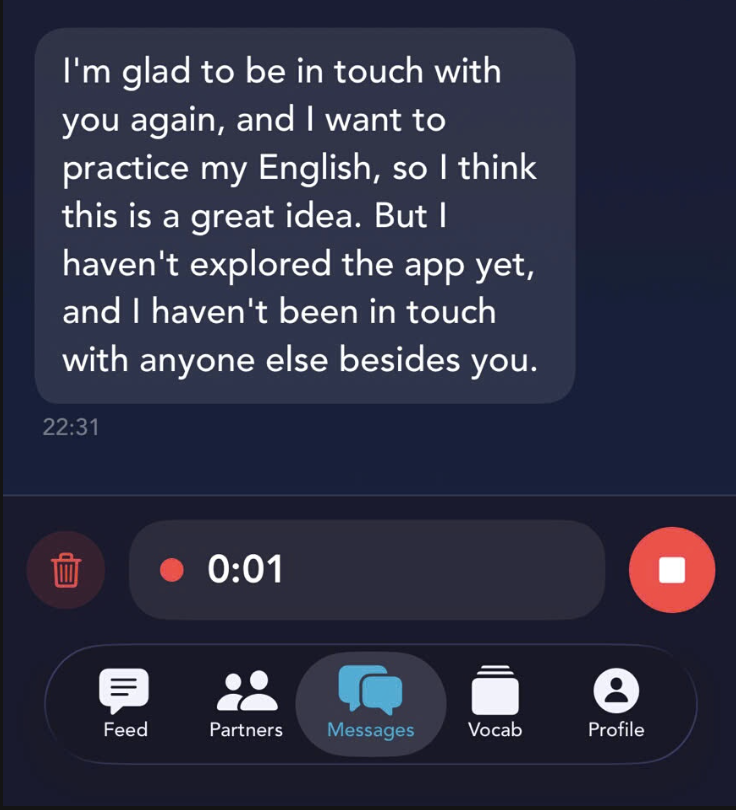
Hearing what your own voice sounds like when speaking can be challenging, to say the least. But recordings reveal subtle differences in pronunciation that slip past you in live conversation — and unlike conversation, you can replay them.
Make it useful by recording something substantial: a 30–60 second story about your day rather than isolated words. When you listen back together, focus on three things — word stress (which syllable you're emphasising), vowel length, and the melody of the sentence. Your partner will spot patterns you can't hear yet.
On Linguar, voice messages live right in the chat, so you can replay any recording as often as you like — no separate recording app needed.
2. Shadow Your Partner's Voice Messages
Shadowing is the closest thing to a pronunciation cheat code: play a short voice message from your partner and repeat it immediately, half a beat behind, copying the rhythm and intonation as closely as you can — like singing along to a song you barely know.
Ask your partner to send you a few short, natural sentences as voice messages. Loop each one until your version sounds boringly similar. Because you're imitating rather than constructing sentences, your mouth learns the sounds without your brain getting in the way.
3. Transcribe What Your Partner Says
Listen to short sentences and try to write down exactly what you hear, then review your transcription together to find the mistakes. This one looks like a listening exercise, but it's secretly a pronunciation one: you can't reliably produce a sound you can't distinguish. The words you consistently mis-transcribe are a map of exactly which sounds to work on.
Then swap roles — correcting your partner's transcriptions teaches you a surprising amount about your own language too.
4. Drill Minimal Pairs
Minimal pairs are words that differ by a single sound: ship/sheep, très/train, or the six different tones hiding in the Vietnamese syllable "ma". These are where most pronunciation problems live.
Ask your partner to list pairs that learners of their language typically confuse. They say one word of the pair at random; you guess which one it was. Once your ear catches up, swap — now you say them and your partner guesses. If they can't tell which word you meant, neither will anyone else.
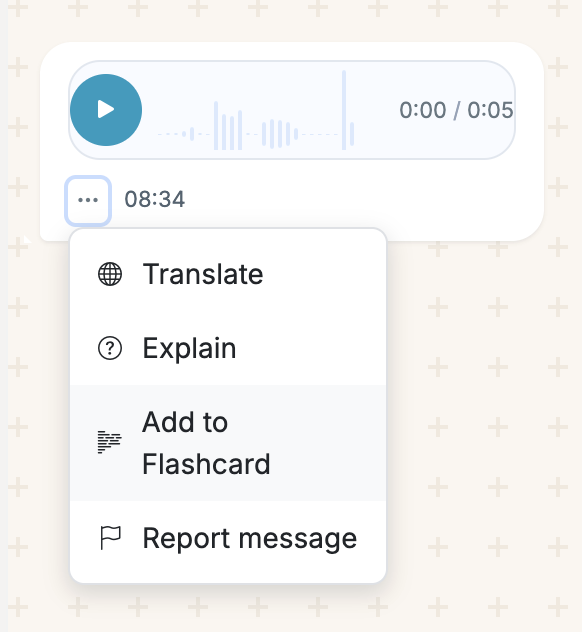
The pairs that trip you up are perfect flashcard material. In Linguar you can save a voice message straight to your vocabulary trainer as an audio flashcard, so you're drilling your partner's actual pronunciation — not a robotic text-to-speech voice — every time the card comes up for review.
5. Be Wary of Local Accents
Everybody speaks differently. If your pronunciation differs from the person you're speaking with, it doesn't necessarily mean you're wrong — you might have learned from someone who comes from a different part of the country.
When in doubt, look the word up on one of our favourite tools, Forvo, where you can hear the same word pronounced by native speakers from different regions. And ask your partner where their accent sits — knowing you're learning "southern Vietnamese" rather than just "Vietnamese" saves a lot of confusion later.
Start With One
Don't try all five in a single session — pick one technique and give it ten minutes at the start of your next exchange. Recording each other is the easiest place to begin.
And if you don't have a tandem partner yet, Linguar matches you with someone learning your language, with voice messages, translations and audio flashcards built right into the chat — everything above, in one app.
